Real Coral - Ocean Decor
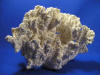
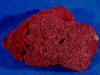
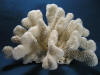
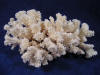
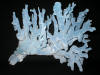
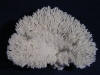
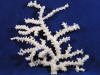
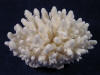
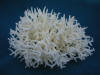
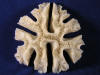
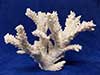
Beautiful real coral. They come in a variety of shapes, sizes and colors. Decorative corals are measured at their widest point.
We are no longer offering coral.
The oceans cover more than 70% of the earth’s surface. The waters are plentiful with incredible biodiversity and beauty. Sea shells and coral are a renewable resource. Naturally they reproduce over and over again which provides us with a re-harvestable natural resource.
The harvesting of them is in fact good for the reefs. The stony corals that we carry are fast growing, reaching up to nearly 12 inches per year. Many of them compete for space by attacking one another. Collectors are assigned to a specific area and are aloud to take only a certain amount. The following years new grids are assigned.
Enjoy the natural beauty of ocean decor coral.
Certainly there are many areas of ecological concern that threaten the world’s reefs. What might be termed local threats are human induced disturbances that negatively impact specific or localized reef areas. Local threats include sedimentation resulting from poorly managed coastal development, deforestation and other disturbance of watershed areas, unprocessed sewage discharge, nutrient loading and eutrification from agrochemicals, coral mining for local building materials and over-fishing.
Mass Bleaching and the ominous shadow of increasing Ocean Acidification are more clearly becoming the recognized results of higher ocean temperatures. Global Warming.
Understanding the importance and having a strict sense of obligation regarding coral reef ecosystems and their ecology, we have confirmed our source suppliers have complied with the strict regulations placed on harvesting. All documentation from the country of origin and CITES permits are submitted to USF&W and US Customs.
All stony corals are CITES Appendix II listed.
All stony corals are legal to import into the U.S.
The CITES Appendix II listing does not indicate that stony corals are threatened or endangered.
The CITES Appendix II listing requires that the source populations of target species collected for commercial export be monitored under guidelines mandated by CITES.
The CITES Appendix II listing mandates that target species are collected on a sustainable yield basis.
The CITES Appendix II listing mandates that all species and quantities thereof are reviewed, quantified and permitted for export by the source countries CITES authorized Wildlife Agency.
A CITES Appendix II Export Permit from the country of origin is required by US Fish & Wildlife for import and export of all species.
Coral cannot be shipped out of the USA.
Large Seashells Medium Seashells Small Seashells Coral Craft Shells Hermit Crab Shells Sea Life
Other Items New Items Sale Items


